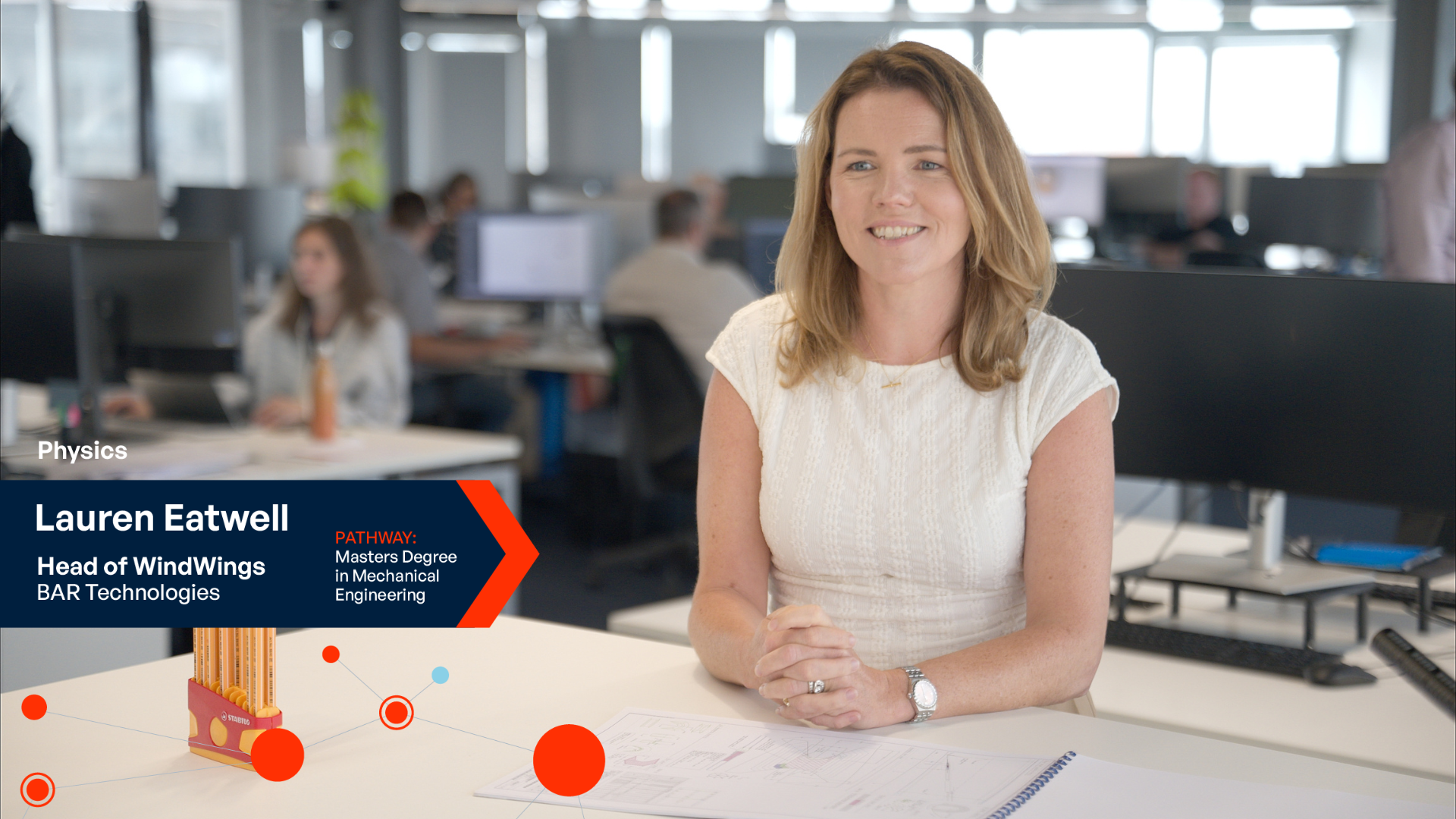
On International Day of Women and Girls in Science, we’re reminded that women still make up less than a third of the global STEM workforce, and far fewer in engineering and technology. The gap doesn’t start with ability. Girls do just as well in science at school. It starts with confidence, visibility and opportunity.
We sat down with Lauren Eatwell, Head of WindWings at BAR Technologies, to talk about curiosity, confidence, climate solutions and what really helps girls see themselves in STEM. For Lauren, science clicked through problem-solving. Maths, mechanics and physics appealed because they allowed her to work things out, not memorise answers. That same curiosity now underpins her career in engineering.
That same mindset now shapes how Lauren thinks about some of the biggest challenges facing the world today, particularly climate change and sustainability. For her, science and engineering are powerful because they allow us to approach problems from different angles.
“If we want to think about things in new and different ways, we need as many varied brains and experiences applied to it as possible.”
Diversity isn’t just about representation, it strengthens outcomes.
“As with anything in life, success comes not just from good ideas, but from being able to realise them through collaboration and communication. Diverse teams bring real strength to companies.”
For girls deciding whether STEM is for them, visibility can be the deciding factor, this is where representation really matters.
“Seeing women across the full spectrum of roles hopefully inspires more girls to embrace those paths”
Her advice to girls is simple: “Don’t worry about where you fit or where you’ll end up, I’m confident no one really knows that. Keep making decisions that let you follow interesting work and studies. If you enjoy STEM subjects, you’ll have a solid foundation that can take you in so many different career directions.”
Lauren’s journey shows what’s possible when curiosity is encouraged and pathways are visible. And on International Day of Women and Girls in Science, her message is clear:
“STEM needs girls’ ideas, voices and talent, now more than ever”
At the 1851 Trust we’re passionate about supporting all young people see themselves in STEM, the gender gap in STEM isn’t about talent. It’s about opening doors and making sure girls know they belong.